

Consulting practice
Public–Private Partnership Advisory
Partnerships that survive the change of everyone who negotiated them.
Overview
How we help
Public health facilities frequently have the mandate, the patients and the premises, but not the equipment, the operating capability or the maintenance funding to deliver a service reliably. Private operators have the opposite. A public–private partnership is the instrument that resolves that mismatch when it is structured so that each side carries what it is genuinely able to carry.
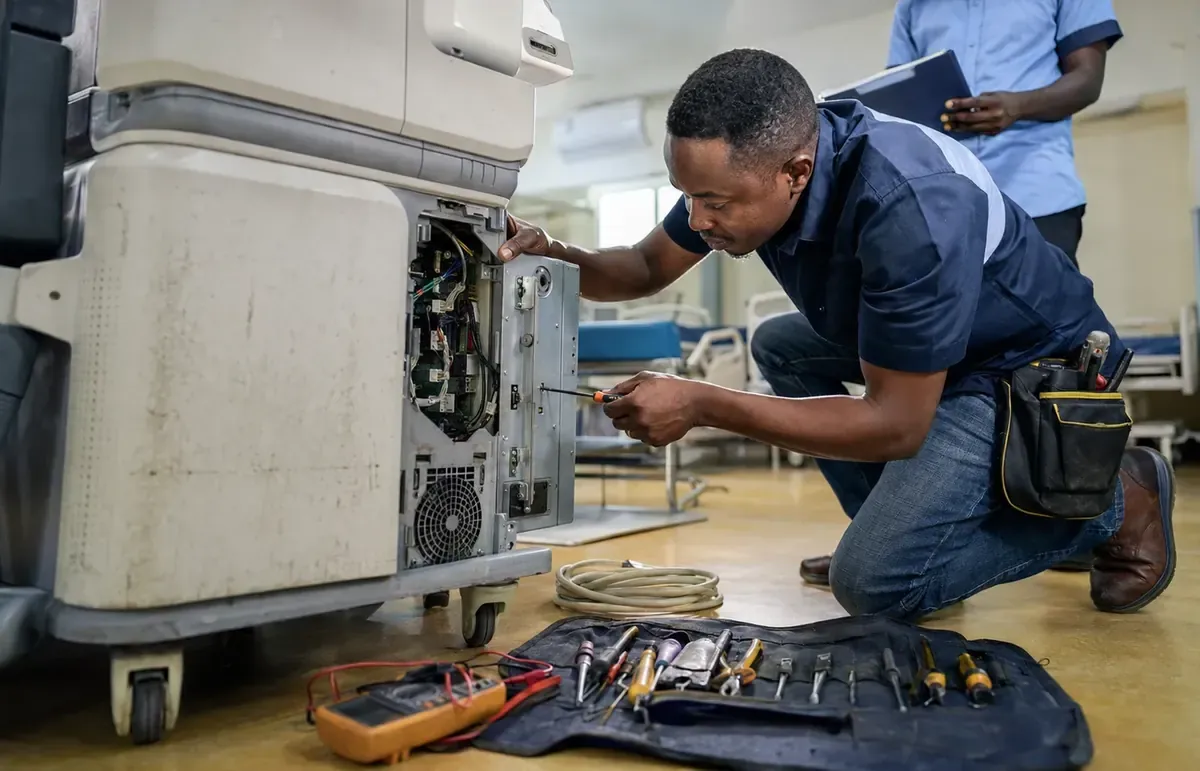
Most partnerships fail not at signature but eighteen months later, when it becomes clear that nobody funded calibration, nobody owns consumable supply, or the revenue split does not cover the cost of running the service. We structure the arrangement around those obligations from the start, and write them into the agreement rather than leaving them to goodwill.
Our own group operates a diagnostic partnership with a Lagos primary healthcare centre, so this is advisory grounded in having done it, not only in having read about it.
Scope of work
What this practice covers
- Partnership feasibility assessment
- Whether a PPP is the right instrument for the facility, the service and the parties involved.
- Responsibility allocation
- Clear, enforceable obligations covering equipment, personnel, consumables, utilities, space, maintenance and compliance.
- Revenue and cost frameworks
- Revenue-sharing models that fund continued operation rather than depending on further capital.
- Equipment and maintenance planning
- Installation, calibration, quality assurance and lifecycle obligations built into the agreement from the outset.
- Governance and performance management
- Reporting, turnaround-time measures, escalation routes and the review cycle that keeps a partnership honest.
- Regulatory and compliance structuring
- Alignment with applicable health, safety and procurement requirements on both sides.
- Negotiation support
- Technical and commercial support through negotiation with public bodies or private operators.
- Implementation and mobilisation
- Standing the service up: staffing, workflow, systems, supply and the first months of operation.

When institutions engage us
Situations this work is designed for
A public facility seeking capability
A primary healthcare centre, general hospital or local government wants diagnostic, imaging or clinical capability it cannot fund or operate alone.
A private operator approaching the public sector
An operator wants to extend into public facilities and needs the arrangement structured so it is viable and defensible on both sides.
A partnership that is not working
An existing arrangement is underperforming because obligations, funding or governance were left vague at the outset.
Questions
Frequently asked
- Do you work with local government and state health bodies?
- Yes, on the structuring and technical side of partnership arrangements. We advise on how a partnership should be built and governed; the decision to enter one rests with the public body.
- What most often causes a healthcare PPP to fail?
- Unfunded ongoing obligations. Equipment gets installed, then calibration, consumables, spare parts and trained personnel turn out to belong to nobody in particular, and the service degrades quietly until it stops.
Related practices
Work that usually runs alongside this



Next step
Discussing public–private partnership advisory?
Describe the institution, the stage you are at and the decision in front of you. We will respond with an honest view of scope and sequence.